4-Week Puppy Training Plan: Potty, Commands & Socializing
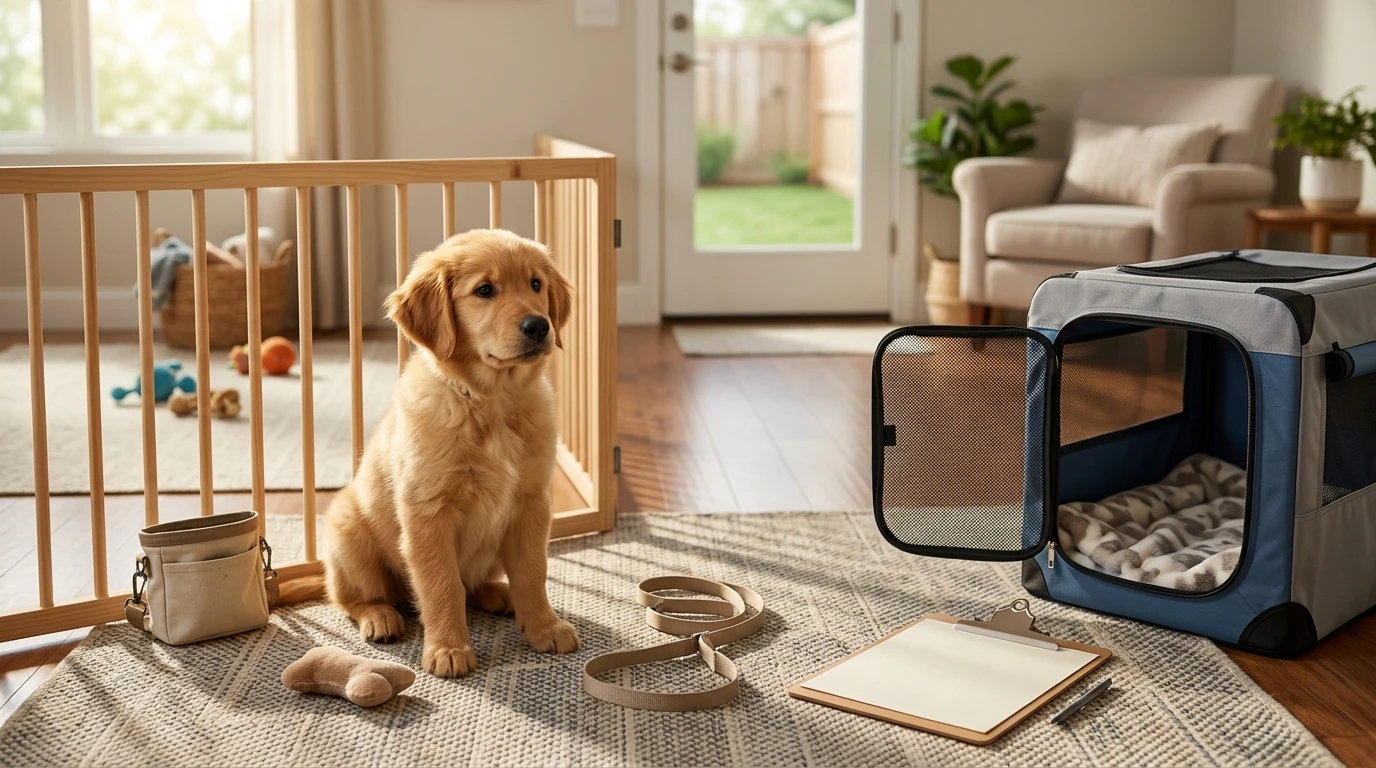
New Puppy Training Starter Guide: A Calm 4-Week Routine for House Training, Commands, and Socialization
The first month with a puppy sets the tone for years. A simple routine, clear cues, and structured social time help prevent common issues like accidents, biting, and fearfulness. Below is a calm, repeatable four-week plan that keeps training realistic: short sessions, lots of rewards, and enough rest to help your puppy actually learn.
What to Set Up on Day One
Before you “train,” set the environment so your puppy can succeed.
- Create two zones: an active area for play/training and a quiet area for rest. This prevents constant stimulation and makes calm behavior easier.
- Choose one outdoor potty spot and commit to it. Same location, same path, same routine.
- Pick a short list of cues and keep the words identical across the household: name, come, sit, down, leave it.
- Use rewards strategically: tiny treats, praise, toys, and access to what your puppy wants (sniffing, greeting, going outside).
- Plan a sleep schedule and protect naps. Overtired puppies bite more and struggle to focus.
- Book or confirm vet visits and ask about safe socialization steps based on vaccine status and local risk.
Helpful print-and-go support
If consistency is tough in a busy household, a printable routine can keep everyone using the same cues and timing. New Puppy Training Starter Guide (printable 4-week routine) is designed for quick daily checklists and simple progress tracking.
A Simple Daily Rhythm That Prevents Accidents
House training improves fastest when potty trips happen before the puppy is desperate. Take your puppy out immediately after waking up, eating, drinking, playing, training, and before/after crating. Keep indoor freedom limited at first; supervision and smart confinement prevent “practice” accidents.
- Follow a predictable loop: potty → short play/training → water/meal (as scheduled) → potty → nap.
- Keep potty trips boring until success happens, then reward immediately outdoors.
- Track patterns (time of day, post-meal timing) so you can anticipate needs.
- If an accident happens: interrupt calmly, go outside, reward for finishing outdoors, then clean with an enzymatic cleaner.
| Time/Trigger | What to do | Why it works |
|---|---|---|
| Wake up | Carry or leash straight to potty spot, reward immediately after | Prevents morning accidents and builds a clear habit |
| After meals (5–20 min) | Potty trip + short sniff walk | Matches digestion timing and reduces indoor surprises |
| After play/training | Potty trip, then water, then nap | Excitement increases urgency; naps prevent overstimulation |
| Every 30–60 min (young puppies) | Brief potty break if unsure | Frequent reps accelerate learning |
| Before crate/bed | Potty + calm wind-down | Sets up success overnight and reduces whining |
Week 1: Bonding, Name Response, and Calm Handling
Week 1 is about trust and gentle routines. Keep sessions short (often under 60 seconds) and repeat them throughout the day.
- Teach the name: say it once, reward eye contact, then pause. Repeat in tiny sessions in different rooms.
- Start handling drills (1–2 minutes): touch paws, ears, collar, and mouth area, then reward. Stop before your puppy struggles so handling stays “easy.”
- Introduce the crate as a rest place: feed meals near/inside, add a chew, and keep it quiet and brief at first. For crate training details, follow guidance from the ASPCA.
- Begin alone-time micro-sessions: step away for seconds, return calmly, and gradually increase to reduce separation-related stress.
- Start bite inhibition foundations: redirect to a chew, pause play when teeth touch skin, and reward soft mouths.
Make “quiet” a real skill
If your puppy struggles to relax, mapping out calm zones can help. A Guide to Safe Space Mapping offers a simple way to set up and use predictable “downshift” spaces so your puppy gets breaks from constant activity.
Week 2: House-Training Reliability and “Sit/Down” as Default Behaviors
Week 2 is where structure pays off. You’re not just preventing accidents—you’re building habits that last.
Week 3: “Come,” Leash Basics, and “Leave It” for Safety
For more foundational training principles and timing tips, the American Kennel Club (AKC) offers a helpful overview of puppy training basics.
Week 4: Socialization That Builds Confidence (Without Overwhelming)
- Focus on positive exposure, not forced interaction. Let your puppy choose to approach; reward calm curiosity.
- Create an experience checklist: different floors, grooming sounds, umbrellas, bicycles, hats, doorbells, car rides.
- Keep sessions short and end early. One good minute beats ten stressful minutes.
- Pair new sights/sounds with treats and distance. If your puppy freezes or tries to flee, increase distance immediately.
- Plan safe puppy-to-dog interactions with neutral, healthy adult dogs in controlled environments and frequent breaks.
- Discuss vaccine-safe options with a veterinarian. The American Veterinary Medical Association (AVMA) emphasizes early socialization while managing disease risk.
Common Training Snags and Quick Fixes
Printable Support: A 4-Week Plan That Keeps Everyone Consistent
For a ready-to-use plan with checklists and a clear week-by-week sequence, see New Puppy Training Starter Guide (printable 4-week routine).
FAQ
How long does house training usually take for a new puppy?
Many puppies show big improvement in a few weeks, but full reliability often takes a few months depending on age, supervision, and consistency. Frequent potty trips, immediate outdoor rewards, and enzyme cleaning for accidents speed the process.
Is it safe to socialize a puppy before all vaccinations are finished?
It can be, but the safest plan depends on local disease risk—confirm specifics with your veterinarian. Lower-risk options include clean puppy classes, meeting known healthy dogs, and carrying your puppy in public while avoiding high-traffic dog areas.
What are the most important commands to teach first?
Prioritize safety and everyday manners: name response, come, sit, leave it, drop it, and down/settle. Keep cues consistent and train in short, upbeat sessions so your puppy can succeed.










Leave a comment