Healthy Daily Diet Plan: Simple Meals, Targets & Snacks
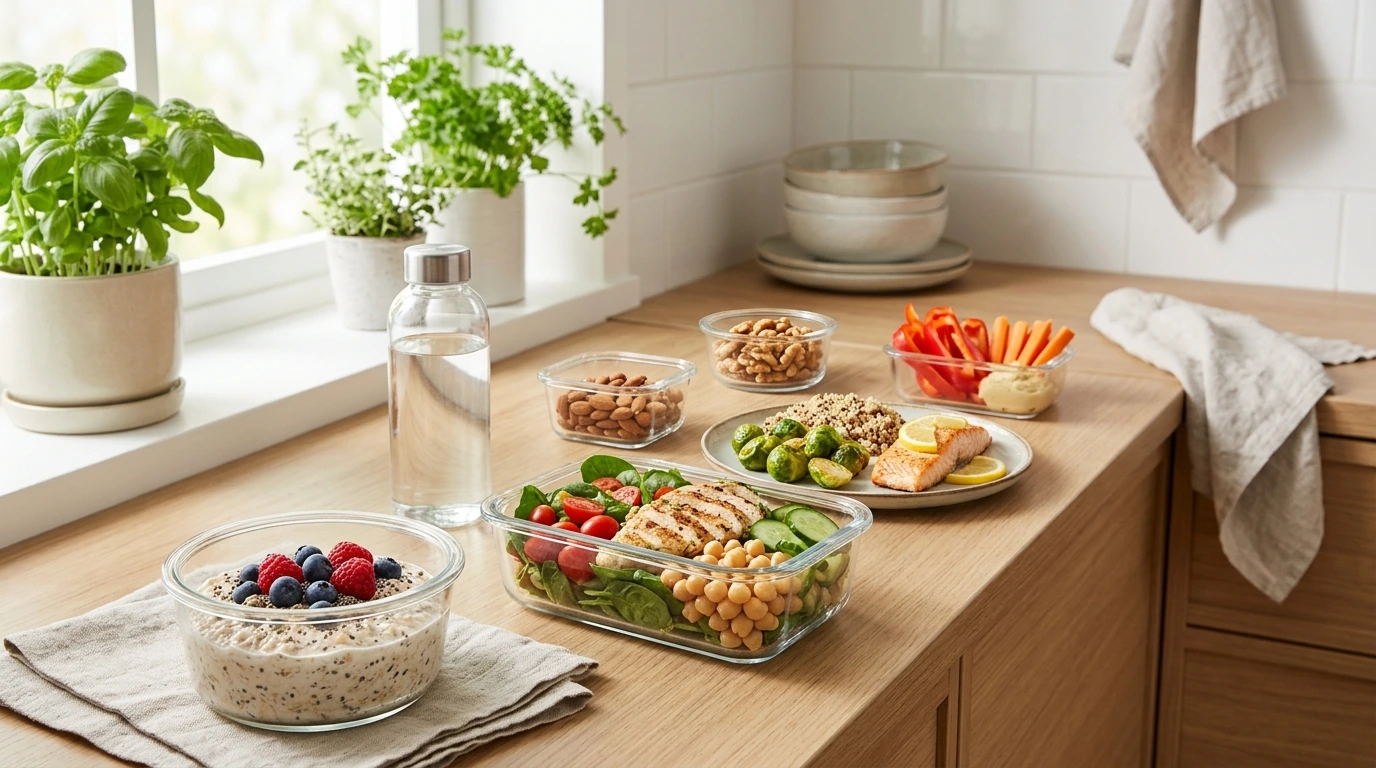
What is a good daily diet plan for a healthy life?
A good daily diet plan for a healthy life is one you can repeat most days: balanced meals, steady energy, plenty of plants, enough protein, smart carbs, and healthy fats—plus hydration. Rather than chasing perfection, aim for a simple structure that covers nutrients and keeps portions reasonable.
A simple daily framework (mix and match)
Breakfast: Build around protein + fiber. Try eggs or Greek yogurt with berries and oats, or a veggie omelet with whole-grain toast. This combination helps curb mid-morning cravings.
Lunch: Use the “half-plate vegetables” rule. Add a lean protein (chicken, beans, tofu, tuna) and a quality carb (brown rice, quinoa, sweet potato, whole-grain wrap). Include a little fat (olive oil, avocado, nuts) for satisfaction.
Dinner: Keep it lighter than lunch if that suits your schedule: baked salmon or lentils, roasted vegetables, and a side salad. If you’re active in the evening, include an extra carb portion.
Snacks (1–2 as needed): Choose items that “bridge” meals: fruit + nut butter, cottage cheese, hummus + veggies, or a small handful of nuts with an apple. Snacks should reduce hunger, not replace meals.
Daily targets that make the plan work
Vegetables and fruit: Aim for 5+ servings/day, emphasizing a variety of colors. Protein: Include a protein source at every meal. Fiber: Get it from beans, whole grains, produce, and seeds. Hydration: Drink water consistently; add herbal tea or sparkling water if plain water gets boring.
How to personalize without overcomplicating
Adjust portion sizes to match your activity level and goals, and swap foods based on preferences, culture, and budget. For a step-by-step starter plan (including practical meal ideas), visit Fuel Your Life: Healthy Eating Starter Bundle.
FAQ
How can I build a healthy grocery list for the week?
Start with proteins (eggs, chicken, beans, fish), then add colorful produce, whole grains, and a few healthy fats like olive oil and nuts. Plan 3–4 core meals and buy ingredients that overlap to reduce waste.












Leave a comment